How in-house creative teams adopt AI without losing the plot
Your CMO has been told AI will make the creative department faster and cheaper. Your creative department has been told AI will make them unnecessary. Both of them heard it from the same keynote.
Neither is right. But the gap between them is where in-house teams stall, and it’s where I work.
The problem isn’t the tools
I’ve led creative teams for thirty years, inside agencies and inside corporations. I’ve spent the last three teaching AI to art students, marketing leaders, and my own team. Here’s what I’ve learned: adopting AI in a creative department is not a software rollout. It’s a change in who gets to make what, how work gets judged, and what the department is for.
Treat it like a software rollout and you get what most companies have now: A license everyone has but very few actually use, with a quiet majority waiting it out, and a leadership team that can’t tell whether the investment is working because nobody agreed what “working” would look like.
That’s a change-management problem wearing a technology costume.
What actually changes
Let’s be concrete. When AI lands inside a creative department, five things need to change; the questions are how, and to what?
1️⃣ THE BRIEF – The creative brief was already the most important document in marketing. Now it’s the interface between your people and their machines. Teams that write vague briefs get vague work from humans and hallucinated work from models. Fixing the brief is the highest-leverage move most departments can make.
2️⃣ ROLES – Junior production work compresses. Senior judgment expands. Someone has to decide what a designer or a copywriter is for now, and it can’t be the AI tool vendor.
3️⃣ JUDGMENT – When anyone can generate a hundred options, the scarce skill is knowing which one. Taste stops being a soft word. It becomes the department’s product - a skill to be nurtured and evaluated.
4️⃣ TRUST – Legal, brand, and procurement now have opinions about creative process. The department needs governance it can defend and creative freedom it can protect.
5️⃣ PURPOSE – A creative team that only executes will be automated. A creative team that finds and frames problems becomes more valuable than it was before. Which one yours becomes is a leadership decision, and it gets made by default if nobody makes it on purpose.
What this looks like in practice
The pattern is the same whether the department writes code or writes copy: people who are good at the work get stuck when the org chart, the permissions, or the story about what they’re for stops fitting. Here are examples of four engagements from my consulting career. (One from inside the company; the rest as an outside consultant.)
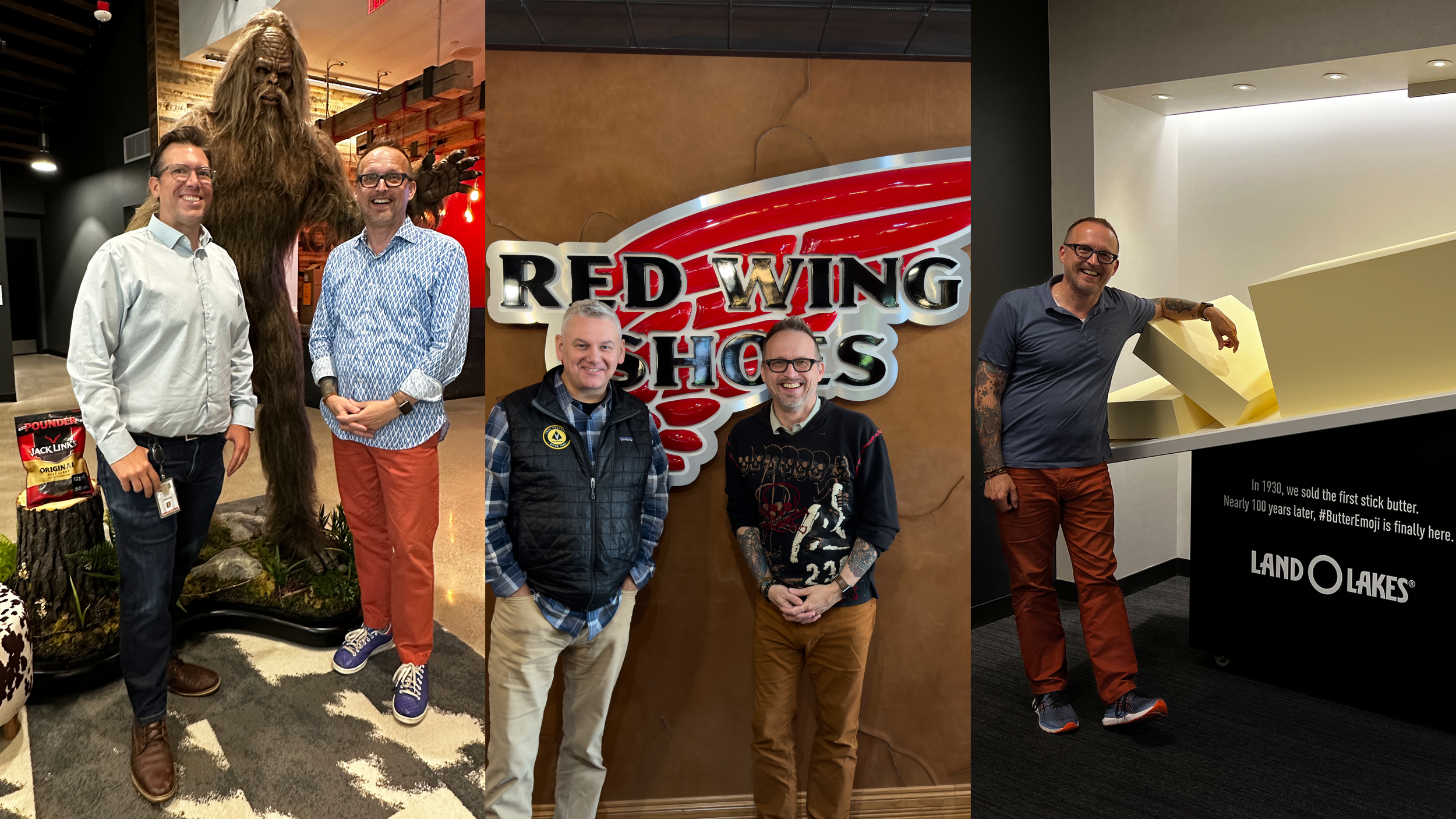
🛠️ LAND O’LAKES, INC. – Hundreds of software engineers supporting three proprietary platforms and R&D, and retention was becoming a serious problem. The cause was structural: the only way for an engineer to advance was to become a manager, and most of them struggled in the role. IT had worked the problem for a year before I was asked to take it on as an internal consultant, while I was leading content and production for the global agricultural cooperative. My analysis and proposal led to a rebuilt software org chart with a parallel subject-matter-expert track, titles and descriptions mapped to equivalent seniority on the management side, plus the education and internal-selling presentations HR and IT leadership needed to make it stick. Six weeks from start to proposal; rolled out in less. A year later, engineering exits were under half the rate of the prior two years and job-satisfaction scores were 20% higher than the year before.
🚫 JACK LINK’S PROTEIN SNACKS – IT and Legal had banned AI software company-wide. Innovation targets kept rising anyway. With marketing leadership I prepared and hosted a “how AI actually works” masterclass for company leaders: real business scenarios, live demonstrations of specific use cases, built so leaders could feel what the tools unlocked rather than hear about it. The “no AI” mandate changed the next day and licensing was approved.
🦷 A DENTAL-INDUSTRY SUPPLIER – A new CMO inherited four marketing departments that didn’t coordinate, a brand campaign that had failed, and an owner steering marketing from behind the scenes. As half of a two-person consulting team, I interviewed 25 people across the C-suite, sales, and the non-marketing leaders who depended on marketing’s output, some more than once. We mapped every marketing assignment, process, role, and deliverable and its connections to sales, events, customer service, and IT, then proposed and refined a new org chart and deliverables charter, and helped the CMO build and pitch it to her team and the C-suite. Complaints about marketing’s inefficiency dropped to zero, and the in-house team went on to create and sell in a new brand campaign.
🚘 APPLE AUTOS – A thirty-year-old automotive retailer, growing share and adding locations, with no core brand to unify sales programs, employee training, or customer interactions, never mind marketing. I worked with the owner, the head of IT and marketing, and five general managers to get agreement on who their most profitable customers actually were and how five locations told one story, then turned that into the employee handbook, new-hire training, and a brand campaign built on differentiating employee behavior. That work started in 2018 and the relationship continues; the company has since grown to seven locations and become the region’s top Ford volume retailer, with the brand core we built still underneath its training and marketing.
Also: RED WING SHOES – a three-hour AI-adoption workshop for the marketing insights and creative production teams.
How I work
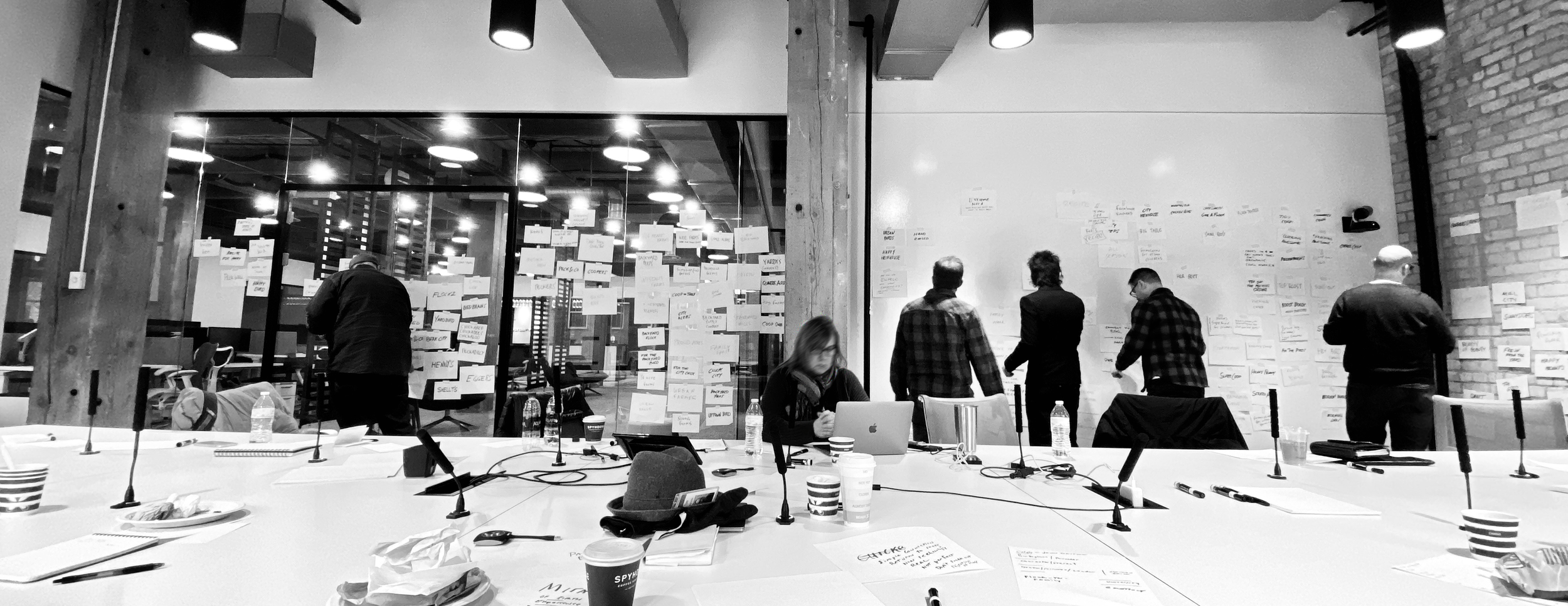
It's typically three parts: First, a diagnostic – I lead interviews across the department and its internal clients, review the real workflow, and get a read on who’s already using what. Second, I draft a plan leadership can believe in, with roles, governance, and a briefing practice fit for the tools. Third, the change itself: workshops, coaching, pilots with real assignments, and a scorecard so leadership can see it moving.
I don’t do this from a slide deck. I’ve run in-house creative operations, I’ve been the agency on the other side of the table, and I teach the tools. That combination is why the work goes faster.
Who this is for
Heads of in-house agencies and creative departments; CMOs and brand leaders responsible for them; Learning and development partners assigned “AI upskilling” who suspect that’s not the whole problem.
If you’re an agency, a university, or a marketing association looking for a speaker, you want the speaking page.
Frequently asked
What does it cost? A diagnostic is a fixed fee, typically two to four weeks of work. Change programs are scoped to the assignment. I’ll provide a close estimate in our first call.
Do you work remotely? Yes. I’m in Minneapolis. Most engagements mix on-site and Zoom.
Is this training? Training is inside it. Training alone doesn’t change a department; it makes a few people faster and the rest anxious.
Which tools? Whichever your legal team will approve. The method doesn’t depend on the vendor.
How is this different from what our agency or a consultancy offers? They sell you the tool or the headcount. I’ve sat in your chair, and will give you actionable outcomes.
Do you work with creative departments only? No. I'm deeply versed in marketing organizations, engineering groups, and retailers, as above. The creative department is where I’m most at home.
Talk to me
Fifteen minutes on Zoom to see if this is a fit. Book a call or email tim@timbrunelle.com.
Further reading: Prompt Engineering v. Creative Briefing · The Role of a Creative Director, Circa 2023 · The Most Important Document in the World? · Curiosity+Courage